Unleashing Organic Elegance: The Power of Fancy Garden Typography
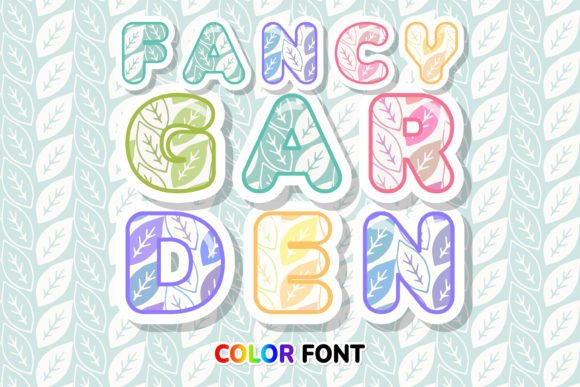
There is a specific moment in every design project where the typography either bridges the gap between concept and reality, or it completely shatters the illusion. If you have ever found yourself scrolling through endless lists of standard sans-serifs and traditional serifs, feeling that something is missing from your nature-inspired or whimsical project, the answer likely lies in a more specialized typeface. Enter Fancy Garden, a premium font that transcends standard text to become a piece of art in itself. This is not just another script font; it is an incredibly cool color font designed in the distinct style of a leaf pattern, offering a vibrant, organic aesthetic that standard black-and-white typefaces simply cannot achieve.
Understanding the Aesthetic: More Than Just Letters
At its core, typography is about communication, but it is also about feeling. When we talk about Fancy Garden, we are discussing a display font that carries a heavy load of personality. The defining characteristic of this typeface is its construction. Instead of solid strokes, the letters are formed using intricate leaf patterns, rendered in color. This immediately sets it apart from traditional handwritten fonts or standard serif fonts.
For the content creator or brand strategist, this visual style solves a common problem: how to look "premium" and "creative" without spending hours vectorizing botanical illustrations to wrap around your text. The font does the heavy lifting. It provides an instant botanical vibe that feels organic yet structured. Because it utilizes Opentype-SVG technology, the color and texture are embedded directly into the font file. This means you get high-fidelity, multi-colored graphics within your text layer, making it a powerful addition to your toolkit of design assets.
Real-World Applications for Modern Brands
You might be wondering how a stylized, leaf-patterned font fits into a modern brand identity. While you wouldn't use it for the body text of a legal contract, its utility in specific verticals is immense. If you are a small business owner in the wellness, beauty, floral, sustainable, or lifestyle sectors, this font speaks your visual language fluently.
Consider the following practical scenarios where Fancy Garden elevates the final product:
- Packaging Design: Imagine a line of organic teas, botanical soaps, or artisanal jams. Using this font on the label instantly communicates the natural ingredients inside. It turns the product name into a centerpiece, reducing the need for additional decorative elements.
- Invitations and Stationery: For event planners and hobbyists, this font is a game-changer for wedding invitations, garden party invites, or shower cards. It sets a romantic, lush tone before the guest even reads the details.
- Social Media Graphics: In the fast-scrolling world of Instagram or Pinterest, stopping the thumb is critical. A title card for a reel or a pin featuring the vibrant, textured look of Fancy Garden offers a high-contrast visual that stands out against flat backgrounds.
- Logo Design: While complex fonts can sometimes be tricky for logos due to scalability, a stylized wordmark using this font can work beautifully for boutique businesses, florists, or yoga studios.
Technical Considerations and Workflow Integration
As a designer or creative entrepreneur, your workflow efficiency matters. You need to know how a new asset fits into your existing setup. Fancy Garden is built as an Opentype-SVG font, which is a specific format that allows for the inclusion of color and transparency within the font file itself.
It is vital to note the compatibility of this creative font. It works seamlessly with professional design software including Adobe Photoshop, Adobe Illustrator, Silhouette, and Inkscape. This makes it ideal for high-end editorial design, web design mockups, and complex marketing assets.
However, there is a crucial technical caveat for those who use cutting machines for physical crafts. While this font is perfect for digital work, the OTF and TTF files are not compatible with Cricut. If you are creating designs specifically for Cricut machines, you would need to treat this as a graphic element rather than a typeable font in that specific software. For Silhouette users, however, it integrates well, allowing for creative cutting projects.
Bridging the Gap with Font Pairing
One of the most common questions regarding highly stylized display fonts is: "What do I pair it with?" Because Fancy Garden is rich in detail and texture, it demands a partner that is calmer and more grounded. You never want to pair two loud voices in the same room.
To maintain visual consistency and readability, pair this font with a clean, geometric sans serif font. Think of fonts like Montserrat, Lato, or Open Sans. These modern typefaces provide a neutral backdrop that allows the leaf pattern of the primary font to shine without overwhelming the viewer.
For example, in a poster design, use Fancy Garden for the main headline—perhaps the event name "Spring Gala"—and then use a light-weight sans serif for the date, time, and location. This hierarchy guides the eye and ensures that the message is both beautiful and legible.
Enhancing Audience Engagement Through Visuals
In digital products and blogging, engagement is the currency of success. Visual fatigue is a real phenomenon; users get tired of seeing the same Google Fonts used over and over again. Introducing a specialized typeface like Fancy Garden can revitalize your content strategy.
If you are a blogger writing about gardening, home decor, or lifestyle, using this font for your chapter headings or "Pin It" graphics adds a layer of professionalism that generic fonts lack. It signals to your audience that you care about the details, which builds trust. For marketers, this translates to better brand recall. When your visual assets are unique, they are easier to remember.
Furthermore, the "cool factor" of a color font often encourages interaction. On social media, unique typography can lead to higher engagement rates simply because it looks different from the standard text users are used to seeing. It adds a tactile, almost 3D quality to flat screens.
Practical Tips for Using Color Fonts
Before you dive into your next project with this premium font, keep these practical tips in mind to ensure the best results:
- Check Your Background: Because Fancy Garden contains color and texture, it reads best on solid, relatively simple backgrounds. A busy photo behind this font might make it hard to decipher the letters. Use a solid color or a blurred background to make the text pop.
- Size Matters: As a display font, this is meant to be seen. Avoid using it at small sizes (under 20pt) where the intricate leaf details might turn into visual noise. It is designed for headlines, sub-headers, and large focal points.
- Review the Styles: Always check the included files. Often, color fonts come with standard versions (black and white) as well as the SVG (color) versions. The standard versions are excellent for situations where you need to scale the vector infinitely for large format printing, such as banners.
- Licensing: As you move from personal DIY crafts to commercial merchandise, always double-check the licensing terms. Ensure your use case—whether it's selling t-shirts or creating client logos—is covered by the license you purchase.
Final Thoughts on Creative Expression
Typography is the voice of your design. While a sans serif font might be the polite conversation, and a script font might be the love letter, Fancy Garden is the vibrant, living garden party. It brings energy, color, and nature into your digital and print creations. By understanding its technical strengths and pairing it wisely, you can use this typeface to create designs that don't just look good, but feel alive. Whether you are building a brand from scratch or refreshing a seasonal campaign, this leaf-patterned typeface offers a fresh, organic path forward.